
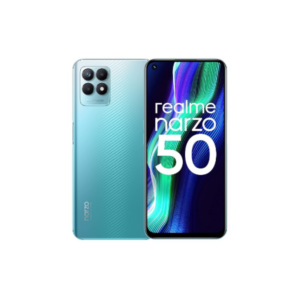
The Realme Narzo 50 is a performance-focused budget smartphone designed for users who want smooth gaming and everyday speed without spending too much. It features a large 6.6-inch Full HD+ display with a 120Hz refresh rate, which is rare in this price segment and makes scrolling, gaming, and general usage feel noticeably smoother than standard 60Hz phones. Powered by the MediaTek Helio G96 processor paired with 4GB RAM, it handles daily tasks, multitasking, and casual gaming fairly well, though don’t expect flagship-level performance under heavy loads.
On the camera side, the 50MP AI triple-camera setup delivers decent shots in good lighting, making it suitable for social media use, while the large 5000mAh battery ensures all-day usage with support for 33W fast charging to quickly get you back up and running. The phone also includes practical features like a side-mounted fingerprint scanner, expandable storage, and a headphone jack—things many brands are removing.
That said, it’s clearly a budget device. You’re getting an IPS LCD instead of AMOLED, no 5G support, average low-light camera performance, and a mono speaker. If your priority is smooth display, solid battery life, and decent gaming performance on a budget, it’s a strong pick. If you care more about camera quality, premium build, or future-proof connectivity, you’ll outgrow this pretty fast.
realme narzo 50
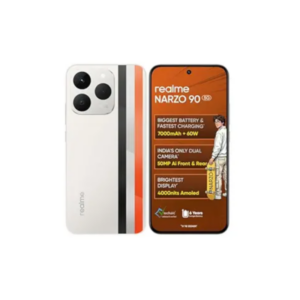

This Realme 5G Smartphone is positioned as a modern, feature-rich device aimed at users who want a balance of performance, connectivity, and camera capability. With 5G support, it ensures faster data speeds and better future-proofing compared to older 4G devices. The OLED display enhances the overall experience with deeper blacks and more vibrant colors, making content consumption noticeably better than standard LCD screens.
It comes with 128GB of storage, which is sufficient for most users to store apps, photos, and videos without constantly worrying about space. The standout feature here is the camera setup, with a 50MP rear camera for detailed shots and a surprisingly high-resolution 50MP front camera, making it particularly appealing for selfies, video calls, and content creators. Fast charging support adds convenience, while water resistance provides basic durability for everyday use.
That said, don’t assume it’s a flagship-level device just from the specs. “Water resistant” doesn’t necessarily mean fully waterproof, and camera megapixels alone don’t guarantee top-tier image quality—processing and sensors matter more. Overall, it’s a solid mid-range option if you want 5G, a good display, and strong front camera performance without overspending.
realme Narzo 90 5G
The Realme 5G Smartphone (Titan Blue, 6.8-inch) is a straightforward, no-frills device that focuses on giving you a large screen and basic 5G performance without trying to compete in the premium space. The 6.8-inch display is clearly built for content consumption—videos, scrolling, and gaming feel more immersive simply because of the size, not because of any high-end display tech.
Performance-wise, this kind of setup is typically mid-range at best. It’ll handle everyday tasks like social media, calls, and light gaming without issues, but don’t expect flagship-level speed or long-term smoothness if you push it hard. The 50MP rear camera sounds impressive on paper, but in reality, it’s tuned for decent daylight shots—low light and video performance will be average. The 16MP front camera is good enough for selfies and video calls, nothing standout.
At 219 grams, it’s on the heavier side, which you will feel during long usage. Also, the single SIM support is a limitation—especially in India where dual SIM is basically standard.
Here’s the blunt take: this phone is about screen size and basic usability, not performance, camera excellence, or premium feel. It works if your needs are simple. If you expect speed, longevity, or a refined experience, this will start feeling outdated pretty fast.
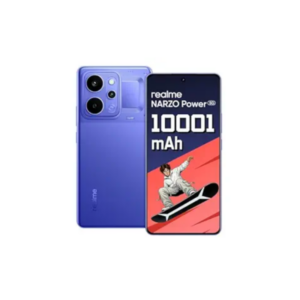
Realme Narzo Power 5G
The Realme 5G Smartphone (Green, 6.7-inch) is positioned as a modern mid-range device that focuses on a large display, decent cameras, and basic 5G connectivity—but don’t assume it’s a powerhouse just from those specs.
The 6.7-inch screen gives you a more immersive experience for content consumption like videos and social media, but unless it’s paired with a high-end panel (which isn’t mentioned here), it’s likely just “good enough,” not exceptional. The 50MP rear camera will handle daylight photography reasonably well, while the 32MP front camera is actually a strong point for selfies and video calls—better than most in this range.
Now the drawbacks: single SIM is a weird limitation, especially in India where dual SIM is almost expected. Also, there’s no mention of the processor, which is a red flag—brands usually hide it when it’s not impressive. That means performance could be average, and you might feel slowdowns with heavy apps or gaming.
Bottom line: this is a usage-focused phone—big screen, solid selfie camera, and basic 5G. But if you care about performance, long-term speed, or overall value, you need more details before trusting it. Right now, it looks like style and specs on paper matter more than actual power.
realme P2 Pro 5G (Parrot Green, 128 GB) (8 GB RAM)
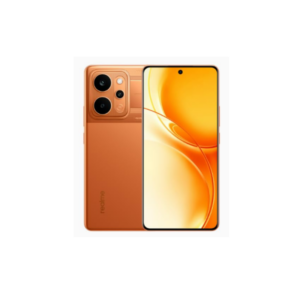
The Realme P4x (with these full specs) is clearly trying to punch above its segment—but there are a few things that look great on paper and a few that genuinely deliver.
First, the battery + charging combo is the biggest strength here. A 7000mAh battery with 80W fast charging is rare. That’s not just “good”—that’s top-tier endurance with actually usable fast charging. Most phones give you either big battery or fast charging, not both. This one nails that part.
The display is also strong: AMOLED, 144Hz, 1600 nits brightness. That’s a genuinely premium-level panel for the price range this is likely targeting. You’ll get smooth scrolling, good outdoor visibility, and solid media experience. No complaints there.
Performance is where you need to stay realistic. The Dimensity 7400 isn’t a flagship chip. It’s mid-range. It’ll handle daily use and moderate gaming fine, but don’t expect ultra settings gaming or long-term “butter smooth” performance after 2–3 years. The “dedicated graphics chip” sounds fancy, but it’s not turning this into a gaming beast.
Camera setup—again, average. The OV50D sensor is decent, but the video limitation (720p at 60fps mentioned here) is a red flag. That’s straight-up weak in 2026 standards. Even budget phones do 1080p or 4K now. Ultrawide is there, which helps, but overall this is not a camera-focused phone.
Build and extras are surprisingly solid: IP65/IP66 protection is better than typical IP64, Wi-Fi 6 and Bluetooth 5.4 are modern, and the phone is relatively slim for a 7000mAh battery—which is impressive engineering.
Realme P4 Power 5G
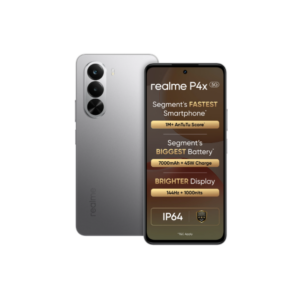
The Realme P4x tries to position itself as a performance-heavy 5G phone, but you need to separate what actually matters from what just sounds impressive on paper.
The 6.72-inch display with a 144Hz refresh rate is the headline feature. On paper, that’s excellent—very smooth scrolling and gaming. But here’s the catch: unless the chipset is strong enough, that 144Hz won’t consistently perform at its full potential. Without a clearly powerful processor mentioned, there’s a real chance it’s more of a marketing number than a practical advantage.
The 7000mAh battery is genuinely a big deal. That’s well above average and will easily push into 1.5–2 days of usage. If your priority is battery life, this is one of the strongest points. Fast charging support helps, but with such a big battery, don’t expect ultra-fast full charges.
Camera-wise, it’s basic. A 50MP + 2MP setup is standard budget-midrange territory. You’ll get decent daylight shots, but low light, video quality, and versatility (no ultrawide, no zoom) are limited. The 8MP front camera is underwhelming compared to competitors offering 16MP or 32MP.
Realme P4x 5G
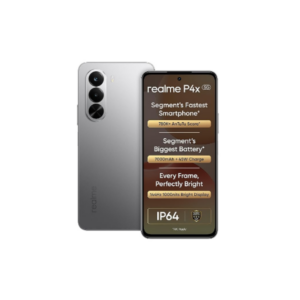
The Realme P4x in this configuration comes across as a typical mid-range 5G phone, but you need to look past the surface-level specs to understand what you’re actually getting.
It offers a 6.7-inch display, which means a large viewing experience suited for content consumption, gaming, and daily multitasking. Combined with 5G support and USB-C connectivity, it checks all the modern basics. The inclusion of fast charging and water resistance is good—but don’t assume “water resistant” means fully waterproof; it’s usually just splash protection.
Now, here’s where reality kicks in: 6GB RAM and 128GB storage is fine, but not future-proof. In 2026, 6GB RAM is the bare minimum for smooth performance. It’ll handle normal apps, social media, and light gaming, but if you’re multitasking heavily or expecting long-term smoothness, this will start slowing down faster than 8GB variants.
Expandable storage is a plus, especially if you store a lot of media, but it doesn’t compensate for limited RAM performance.
Realme P4X Smartphone
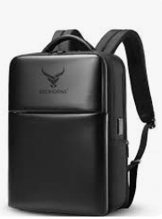
 Premium matte black backpack with a reinforced structure, featuring a prominent embossed logo and dedicated padded compartments for electronics.
Redhorn Urban Tech Backpack
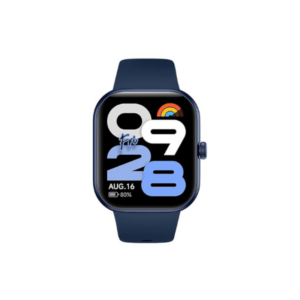
The Xiaomi Smartwatch is built for users who want a strong mix of display quality, health tracking, and long battery life without spending on premium-tier wearables. It features a sharp 1.85-inch curved AMOLED display with always-on support, good brightness, and smooth visuals, making it feel more premium than most budget smartwatches. Backed by Xiaomi’s optimized power management, it delivers up to 14 days of usage, which is a major advantage if you don’t want to charge your watch every couple of days.
On the fitness side, it covers all the essentials—heart rate, SpO₂, sleep, stress, steps, calories, and even female health tracking—with claimed high accuracy, making it reliable for daily monitoring rather than just basic tracking. The lightweight design with anti-bacterial TPU straps ensures comfort for all-day wear, while IP68 water and dust resistance means it can handle workouts and everyday conditions without issues.
That said, don’t expect a full smartwatch experience. With limited storage, Bluetooth-only connectivity, and no serious app ecosystem, it’s clearly focused on health tracking and basic smart features like notifications, alarms, and reminders. If your goal is a stylish fitness tracker with a great display and long battery life, it delivers well. If you’re expecting advanced apps, deep integrations, or a true smartwatch experience, this will fall short pretty quickly.
Redmi Move Smartwatch
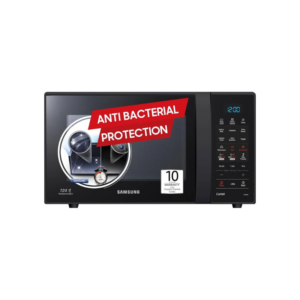
The Samsung 21L Convection Microwave Oven is a compact convection microwave designed for users who want an all-in-one cooking appliance instead of a basic reheating machine. Unlike solo microwaves, this model combines microwave, grill, and convection functionality, which means it can handle reheating, grilling, baking, roasting, and regular microwave cooking in a single unit. For small families, couples, or people living in apartments with limited kitchen space, this category is often far more practical than buying separate appliances.
The 21-liter capacity is compact but usable for everyday cooking and moderate baking needs. You can comfortably bake cakes, cookies, pizzas, grill paneer or chicken, and prepare basic oven-style dishes. Samsung’s ceramic enamel cavity is one of the stronger features because it is more scratch-resistant, easier to clean, and less likely to absorb stains or odors compared to cheaper painted interiors. That matters more long term than flashy marketing features people rarely use.
Its convection mode allows proper baking with circulating hot air, while grill mode helps create browning and crisp textures that solo microwaves cannot achieve. The 2350W power consumption indicates it has enough heating strength for decent convection performance in this size category. The black finish also gives it a cleaner and more premium appearance compared to budget white microwave designs.
But there’s still a practical limitation people should understand: compact convection microwaves are convenience-focused appliances, not replacements for large OTGs or professional ovens. The smaller cavity size limits large trays and batch baking, and airflow consistency won’t match dedicated ovens for serious baking enthusiasts.
For most households though, this type of microwave hits a good balance. It’s ideal for users who want one compact appliance capable of daily reheating plus occasional baking and grilling without cluttering the kitchen with multiple machines.
Samsung 21 L Convection
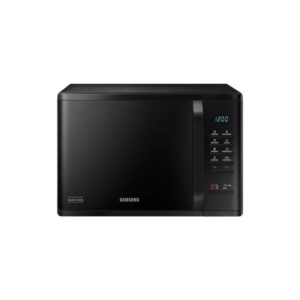
The Samsung 23L Solo Microwave Oven is a straightforward solo microwave designed for users who mainly want convenience, reliability, and easy daily operation without paying extra for convection or grill features they may never actually use. With a 23-liter capacity, it offers slightly more usable space than compact 20L models, making it more comfortable for medium-sized bowls, plates, and family-sized reheating tasks.
This microwave is primarily built for reheating food, defrosting frozen items, warming beverages, and simple microwave cooking. The quick defrost mode is genuinely useful because it helps thaw food more evenly and faster than manually setting low power levels, which many users struggle with. The child safety lock adds basic protection in households with kids, while Samsung’s ceramic enamel cavity is one of the biggest advantages of this model. Compared to regular painted interiors, ceramic enamel surfaces are easier to clean, more resistant to scratches, and better at preventing odor and stain buildup over time.
The black finish gives it a cleaner and more premium appearance, and the overall design philosophy here is simplicity. This is the kind of appliance that works well for people who don’t want to learn complicated cooking presets or touchscreen interfaces and simply need dependable microwave functionality every day.
But the important limitation remains unchanged: this is still only a solo microwave. Despite marketing language around “cooking,” it cannot properly bake cakes, grill meat, roast food, or create crispy textures because there is no grill heater or convection fan. A lot of buyers misunderstand this and end up disappointed expecting oven-like results from microwave-only heating.
So realistically, this model makes sense if your priorities are reheating, defrosting, convenience cooking, easy cleaning, and dependable long-term usage. If your actual goal includes baking, grilling, or pizza-style cooking, then a convection microwave would be the correct category instead.
Samsung 23 L Solo
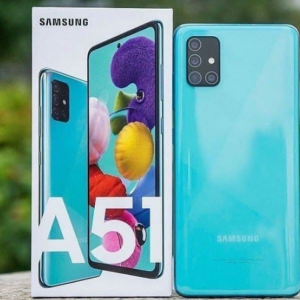 Sleek blue smartphone featuring a multi-camera system, vibrant display, and reliable performance for daily use.
Samsung Design Smartphone with Multi-Camera Setup – Blue
Electronics
Risus commodo viverra maecenas accumsan
lacus vel facilisis.