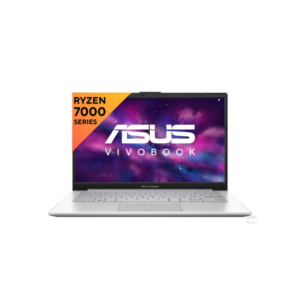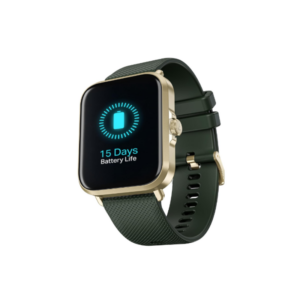
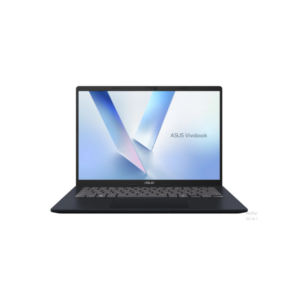
The ASUS Vivobook 14 (M1407) is a practical mid-range Windows laptop for everyday productivity, multitasking, content consumption, office work, browsing, and light creative tasks. The biggest advantage here is balance — you’re getting a modern AMD Ryzen processor, 16GB RAM, 512GB SSD, and a 1920×1200 display in a lightweight body around 1.5 kg, which is actually solid value if priced correctly. The 16GB RAM matters because most cheaper laptops still cripple users with 8GB, which becomes annoying fast with Chrome tabs, editing tools, Canva, light video work, or multitasking.
But don’t confuse this with a performance or premium machine. It’s not competing with the Apple MacBook Air with M4 chip in battery efficiency, build quality, display quality, speaker quality, thermal optimization, or long-term smoothness. The MacBook Air is on another level technically, especially for creators, video editors, and people deep inside the Apple ecosystem. The ASUS is more of a “good enough for most people” laptop.
The weak point with many Vivobook models is usually build consistency, average speakers, average webcam quality, and battery life that looks good on paper but drops faster under real-world heavy use. Also, Ryzen integrated graphics are decent for casual editing and light gaming, but don’t expect serious gaming or heavy 4K editing performance.
If your use case is social media management, Canva, browser-heavy work, content scheduling, Zoom calls, Google Sheets, light Photoshop, and portability without overspending, this ASUS makes more financial sense than buying a MacBook just for brand value. But if you want a laptop that still feels ultra-fast, silent, premium, and reliable even after 5–6 years, the MacBook Air is objectively stronger.
ASUS Vivobook 14 2025 Office 2024 + M365 Basic Amd Ryzen Ai 5 Quad Core
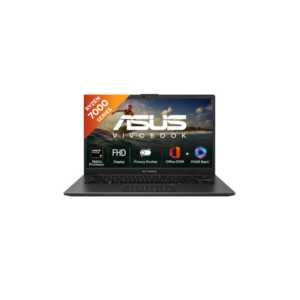

The ASUS Vivobook 14 shown here is a well-balanced entry-to-mid-range Windows laptop built mainly for students, office users, remote workers, and general home productivity. Compared to cheap low-end laptops, this configuration is actually sensible because it combines a modern Ryzen quad-core processor, fast LPDDR5 memory, 512GB NVMe SSD storage, Wi-Fi 6E, fingerprint security, and a lightweight 1.38 kg body. For normal everyday usage, that combination is enough to feel responsive and modern.
The Ryzen processor with 4 cores and 8 threads is perfectly capable for multitasking, Chrome-heavy work, Microsoft Office, content scheduling, Zoom calls, streaming, Canva, light Photoshop work, and daily productivity. The SSD will make boot times and app launches fast, and Wi-Fi 6E support is surprisingly good for this segment because many laptops in this price range still use older wireless standards.
The laptop also includes genuinely useful practical features rather than useless marketing gimmicks. The webcam privacy shutter is good for security, the fingerprint sensor adds convenient login protection, and the backlit keyboard helps during night usage. AI noise cancellation is useful for meetings and calls, especially for remote work environments. MIL-STD-810H durability certification also gives slightly better confidence for daily handling compared to ultra-cheap fragile laptops.
But there are clear compromises, and buyers should understand them honestly. The display is only average. Yes, it’s Full HD IPS and anti-glare, which is good, but 250 nits brightness and 45% NTSC color coverage are mediocre by modern standards. For movies, office work, browsing, and YouTube it’s fine, but for professional color-sensitive editing or premium visual quality, it’s nowhere near higher-end OLED or MacBook displays.
The biggest limitation is the RAM situation. Even though LPDDR5 is fast, this model appears capped at 8GB onboard memory, which is soldered and not realistically upgradeable. In 2026, 8GB on Windows is becoming restrictive for heavy multitasking. If you keep many Chrome tabs open alongside Photoshop, video calls, Spotify, Canva, and editing tools, memory pressure will happen. That’s the main weakness of this configuration long term.
Battery life around 6 hours real-world is decent but not exceptional. Don’t expect MacBook-level endurance. The plastic body also keeps costs lower, but it won’t feel premium like aluminum ultrabooks.
Overall, this is a smart practical laptop for normal productivity users who want portability, modern connectivity, SSD speed, and reliable day-to-day performance without overspending. But if long-term future-proof multitasking matters, the 8GB soldered RAM is the biggest concern here and the one thing that could age badly first.
ASUS Vivobook Go 14
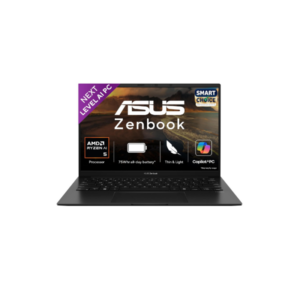 The ASUS laptop comes with Windows OS and is powered by an AMD processor with integrated AMD graphics, making it suitable for everyday multitasking, office work, browsing, streaming, and light creative tasks. It features a 14-inch display with a smooth 120Hz refresh rate, which makes scrolling and animations feel noticeably more fluid compared to standard 60Hz laptops. With 16GB RAM and a 512GB SSD, the laptop offers fast performance, quick boot times, and enough storage for regular use. Its lightweight and portable design also makes it convenient for students, professionals, and users who need a balance between productivity and entertainment.
ASUS Zenbook 14 Smartchoice AMD Ryzen AI 5 340
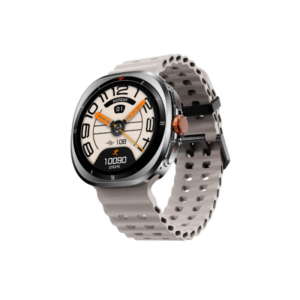
The Fire-Boltt Smartwatch is a straightforward, budget-focused wearable built for basic fitness tracking and everyday convenience rather than advanced smart features.
Designed with a round dial and digital display, it leans into a classic watch aesthetic while still offering modern functionality. The Bluetooth connectivity allows it to sync with your smartphone for notifications, calls (on supported models), and quick access to essential updates without pulling out your phone every time.
In terms of tracking, it covers the fundamentals—activity monitoring and sleep tracking. That means steps, basic movement data, and sleep patterns, but don’t expect highly accurate health analytics or medical-grade insights. This is surface-level tracking meant for awareness, not deep optimization.
The unisex design keeps it versatile, suitable for daily wear across different styles and use cases. It’s lightweight, easy to wear, and aimed at users who want something simple and functional.
Bottom line: this is an entry-level smartwatch that gets the basics done. If you’re expecting precision tracking, premium build, or advanced ecosystem features—you’re looking at the wrong category.
Axiom Smartwatch
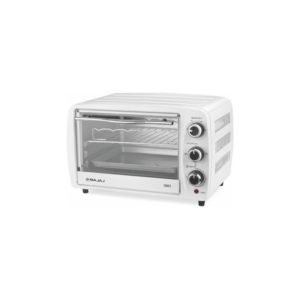
The Bajaj 16L Oven Toaster Griller is a compact OTG designed mainly for small families, bachelors, or anyone with limited kitchen space who still wants proper baking and grilling functionality. With a 16-liter capacity, it’s suitable for around 2–3 people and can handle basic cooking tasks like baking cakes, pizzas, cookies, grilling vegetables or chicken, and making toast. It supports convection cooking for more even heat distribution and also includes a rotisserie function, which is uncommon at this size and useful for roasting small portions evenly.
The oven offers a temperature range from 0°C to 250°C, along with a timer featuring auto shut-off, making it easier to avoid overcooking. The thermostat continuously monitors temperature for stable cooking performance, while the unique heating element design helps improve heat efficiency. It comes with useful accessories including a baking tray, grill rack, tong, crumb tray, and skewer rods, so you don’t need to buy extras immediately after purchase. The body combines powder-coated and stainless-steel construction, which keeps it lightweight but reasonably durable.
Now the limitation: 16 liters is small. You’re not cooking large batches or fitting big dishes inside comfortably. If you plan to bake frequently or cook for more than 3 people regularly, this size will become restrictive very quickly. But for casual home use, beginners, or light baking and grilling, it offers decent value without taking up much space or power.
Bajaj 1603 16 Litres
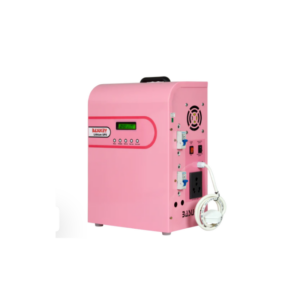 This 500VA 400W Lithium-ion Pure Sine Wave Inverter is a very small-capacity backup system, and you shouldn’t mistake it for a full inverter solution. On paper, it offers pure sine wave output—which is good because it gives clean, stable power for sensitive electronics—but the real limitation is the 400W load capacity. That means it can handle basics like a router, a couple of lights, maybe a laptop or a small TV, but anything beyond that—like a desktop PC with a monitor, multiple fans, or a fridge—is either going to overload it or drain it very quickly. The lithium-ion battery makes it compact, low-maintenance, and faster charging compared to traditional inverter batteries, and the wall-mount design keeps it neat and space-saving. But capacity is king in backup systems, and this one simply doesn’t have enough of it. In real usage, expect short backup durations and strict limits on what you can run. So this only makes sense if your need is minimal backup for a few essential devices; if you’re expecting proper home backup or multi-device usage, this will fall short almost immediately.
Basukey Lithium UPS BD5OO
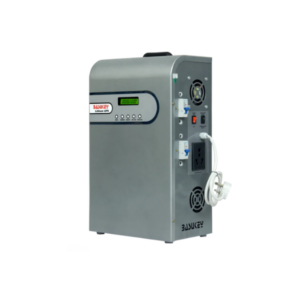
This setup is a completely different league compared to those UPS units—and if you think they’re comparable, you’re mixing up two very different categories.
The 1000W Pure Sine Wave Lithium-ion Inverter System is essentially a full inverter + battery backup system, not a short-term UPS. With a 1000W output and a 100Ah lithium-ion battery, you’re looking at hours of backup, not minutes. For example, even with a 200–300W load (PC + fan + lights), you could easily get 3–5+ hours, depending on efficiency and usage. That’s something no small UPS can touch.
The biggest advantage here is the pure sine wave output—this is critical. It means clean, stable power, safe for high-end PCs, gaming rigs, TVs, and sensitive electronics. No weird buzzing, no compatibility issues like you get with cheap stepped sine wave UPS systems.
The lithium-ion battery is another major upgrade. It lasts longer, charges faster, and handles deeper discharge cycles compared to traditional lead-acid batteries used in UPS systems. You’re also getting proper protections—overload, short circuit, surge—which makes it far more robust for real-world use.
Basukey Lithium UPS BG1250

 Elegant smartphone with a bezel-less display, dual rear camera, and lightweight design for everyday use.
Bezel-Less Smartphone with Dual Camera – Pink
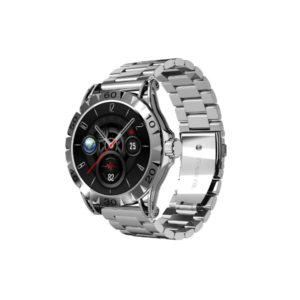
The boAt Smartwatch is a budget-oriented wearable built for basic smart functionality and everyday fitness tracking, not for high-end performance or precision health monitoring.
It features a digital display in a wristwatch form factor, designed for simple interaction and quick readability. With Bluetooth connectivity, it pairs with your smartphone to deliver notifications, call alerts, and app updates directly to your wrist—useful, but dependent on your phone being nearby.
The tracking capabilities cover essentials like activity and sleep monitoring. You’ll get step counts, movement data, and sleep insights, but don’t expect high accuracy or deep analytics—this is entry-level tracking meant for general awareness.
A notable addition is Google Assistant support, allowing basic voice commands and quick tasks through your connected device. It adds convenience, but it’s not a full standalone assistant experience like premium smartwatches.
Overall, the design is simple and functional, aimed at users who want an affordable smartwatch for daily use without getting into complex features or higher price ranges.
Bottom line: it does the basics—notifications, light tracking, and voice assistance. But if you expect accuracy, performance, or independence from your phone, this won’t deliver.
Boat Enigma Orion Men’s Luxury Smartwatc
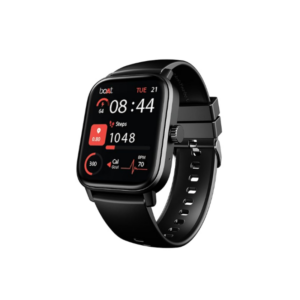 The boAt Wave Call 3 Smartwatch is a typical budget smartwatch that focuses more on convenience and style than real performance. It comes with a large 1.83-inch HD display, Bluetooth calling, and a functional crown, making everyday interactions smooth and fairly user-friendly for quick tasks like answering calls or checking notifications. Features like heart rate, SpO2, stress, sleep, and even female wellness tracking are included, but these are standard across this price segment and should be treated as rough estimates rather than accurate health data. The claimed 10-day battery life and IP68 resistance make it practical for daily wear, especially for casual fitness tracking and general use. However, like most entry-level smartwatches, it runs on a limited system with no real app ecosystem, meaning it’s essentially a smart extension of your phone rather than an independent device. Overall, it’s a decent pick if you want a stylish, feature-loaded watch for basic usage, but it doesn’t hold up if you’re expecting precision, advanced fitness insights, or a premium smartwatch experience.
boAt Wave Call 3 Smartwatch
Electronics
Risus commodo viverra maecenas accumsan
lacus vel facilisis.