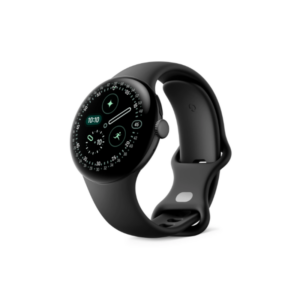

Meet the Google Pixel 8a—a smartphone built to deliver smart performance, powerful photography, and long-term reliability without unnecessary complexity.
Powered by the Google Tensor G3 processor, it handles everyday tasks, gaming, and AI-driven features with ease. Running on Android 14, the experience is smooth, responsive, and deeply integrated with Google’s ecosystem.
The 6.1-inch OLED display offers a sharp 1080 × 2400 resolution with 430 PPI density, delivering clear and vibrant visuals. With a 120Hz refresh rate and up to 2000 nits peak brightness, it ensures smooth interaction and strong outdoor visibility. The always-on display adds quick access to essential information.
Photography is a core strength. Equipped with a high-quality sensor and supported by AI features like Magic Editor, Best Take, and Magic Eraser, it allows you to capture and refine images effortlessly. With 4K video recording and Super Res Zoom up to 8x, it delivers consistent results across different shooting conditions.
Battery performance is designed for longevity, offering up to 72 hours of usage with Extreme Battery Saver. The 4492 mAh battery supports wireless charging, ensuring convenient top-ups throughout the day.
Connectivity is fully modern with 5G, Wi-Fi 6E, Bluetooth 5.3, NFC, and eSIM support. Security is handled through both Face Unlock and a fingerprint scanner, giving you fast and flexible access.
Built with durability in mind, it features IP67 water and dust resistance and a sturdy design with a lightweight feel at 188g.
If you want a practical smartphone that combines strong camera performance, clean software, and reliable battery life, this delivers exactly that—without overcomplicating the experience.
Google Pixel 8a
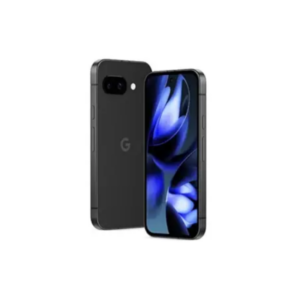

Experience intelligent performance and refined design with the Google Pixel 9a 5G, a smartphone engineered for users who prioritize photography, smooth performance, and clean software.
Powered by the advanced Tensor G4 processor and backed by 8GB RAM, it delivers fast, responsive performance across apps, multitasking, and AI-driven features. Running on Android 15, the experience is fluid, minimal, and deeply integrated with Google’s ecosystem.
The 6.3-inch P-OLED display offers crisp visuals with a 1080 × 2424 resolution, 422 PPI density, and a 120Hz refresh rate for smooth scrolling and responsiveness. With peak brightness reaching 2700 nits, visibility stays sharp even in bright outdoor conditions.
Photography is where this device stands out. The 48MP dual-camera system captures detailed, high-quality images with features like Portrait Mode, Best Take, and Add Me. With Super Res Zoom up to 8x and 4K video recording, it’s built for users who want reliable, smart photography without complexity.
Battery performance is solid, with a 5100 mAh capacity supporting long usage cycles, up to 30 hours of talk time, and extended standby. Wireless charging support adds convenience to everyday use.
Connectivity is future-ready with 5G, Wi-Fi 6E, Bluetooth 5.3, NFC, and dual SIM support (Nano-SIM + eSIM). Security is handled via a fast fingerprint sensor, while IP68 rating ensures resistance against dust and water.
The design keeps things practical—flat edges, lightweight build at 186g, and Gorilla Glass protection—without unnecessary gimmicks.
If your priority is a clean Android experience, strong camera performance, and reliable day-to-day usage, this device delivers exactly that without overcomplicating things.
Google Pixel 9a 5G
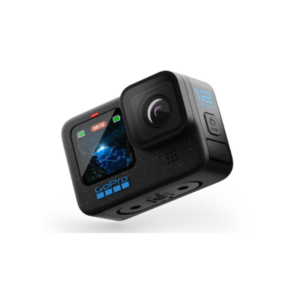 GoPro HERO12 Black (Action Camera) A rugged, high-performance action camera built specifically for motion, outdoor shooting, and extreme environments—not general photography. Core Specs Video: 5.3K (up to 60fps), 4K up to 120fps Photo: 27 MP Sensor: 1/1.9" CMOS Stabilization: HyperSmooth 6.0 (top-tier) Waterproof: Up to 33 ft (10 m) without case Weight: 154 g Storage: microSD (no internal storage) What It Does Really Well 1. Action Video (its main job) 5.3K footage is sharp and flexible for editing 120–240 fps = smooth slow motion Handles biking, running, travel, underwater, etc. 2. Stabilization HyperSmooth 6.0 + Horizon Lock = insanely stable footage Even shaky footage looks usable 3. Durability Waterproof, shock-resistant, heat-tolerant Built for rough use, not careful shooting 4. Mounting Flexibility Helmet, chest, bike, car, tripod—you name it Features That Matter (and ones that don’t) Actually useful: Timecode sync (for multi-cam setups) HDR video Voice control Long battery (for an action cam) Mostly hype or limited use: “27MP photos” → average quality compared to phones “2x zoom” → digital, not real zoom “AirPods compatibility” → niche use case Real Limitations (don’t ignore this) Low-light performance is weak (small sensor problem) Photos are mid at best → your phone can beat it Fixed lens → no flexibility like DSLR/mirrorless Not for close-ups / portraits Who Should Buy This Travel vloggers doing outdoor content Bikers, riders, adventurers People shooting motion-heavy videos POV creators (helmet/chest mount content) Who Should NOT Buy This If you want cinematic video indoors If your focus is Instagram photos / portraits If you already have a good smartphone + don’t do action content
GoPro HERO12 Black Action Camera
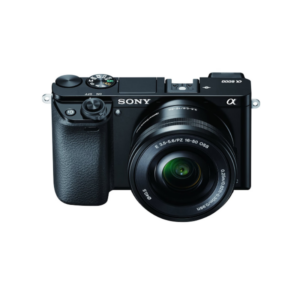 Sony APS-C Mirrorless Camera (16–50mm Kit Lens) A beginner-friendly mirrorless camera with solid photo performance, fast autofocus, and compact design—but clearly dated in video capabilities. Key Specifications Sensor: APS-C CMOS Resolution: 24.3 MP Lens: 16–50mm kit lens (24–75mm equivalent) Mount: Sony E-mount ISO Range: 100 – 25600 Burst Shooting: 11 fps Max Shutter Speed: 1/4000s Battery Life: ~360 shots Photography Performance 24 MP APS-C sensor = good image quality for photos 179 phase-detection AF points = fast and reliable autofocus 11 fps burst = decent for action shots Strong for: Street photography Portraits Everyday shooting Video Capabilities (Major Weak Point) Max Video: 1080p only Formats: AVCHD, MP4 No 4K 👉 This is where it shows its age (released in 2014) Build & Design Compact and lightweight mirrorless body Tilting LCD screen (useful for framing) Electronic viewfinder included No weather sealing Lens Info (Kit Lens Reality) 16–50mm = versatile zoom range Aperture: f/3.5–5.6 (not great for low light or background blur) Good for beginners, limiting for advanced users Connectivity & Features Wi-Fi enabled USB charging Built-in flash RAW + JPEG shooting Time-lapse support Ideal Users Beginners entering photography Budget users wanting interchangeable lenses Casual photographers (not serious videographers)
GoPro HERO13 Black Camera
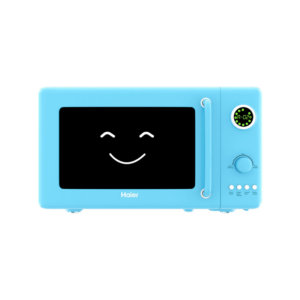
The Haier Vogue 20L Solo Microwave Oven with 12 Autocook Menus is a basic solo microwave meant mainly for reheating, defrosting, and simple cooking — not for baking or grilling. It comes with a 20L capacity, which is enough for 1–3 people, and delivers 700W microwave power, so heating speed is decent but not very fast compared to higher-end models. The standout thing here is the design: Haier is clearly targeting younger buyers with colorful variants like Blueberry, Lemon, and Peach instead of the usual boring black box look. It has a digital display, jog dial controls, 12 auto-cook menus, instant start, and defrost functionality, which makes daily use simple for beginners.
But here’s the practical reality: if your use case is just reheating rice, curries, tea, milk, frozen food, popcorn, noodles, or basic microwave cooking, this is perfectly fine. If you think you’ll do cakes, pizza, grilling chicken, or serious cooking, don’t buy a solo microwave — you’ll regret it later because solo models cannot bake or grill properly. For that, you need a convection microwave or a separate OTG. Even Reddit discussions around microwave buying repeatedly point out that solo microwaves are mainly for reheating and convenience cooking, while convection models are required for baking-style tasks.
The biggest advantage of this Haier model is simplicity and price. It usually sells around ₹6.8k–₹7.8k online, which is reasonable for a branded digital solo microwave. The downside is that build quality and long-term service network are not as strong as brands like LG, Samsung, or IFB in many Indian cities. Also, 700W power is average, so don’t expect super-fast heating.
Haier 20 L Solo
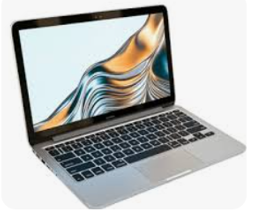
 Versatile silver laptop with a crisp vibrant display and responsive trackpad, perfect for streaming, content creation, and everyday home use.
HD Graphics 13″ Silver Multimedia Laptop
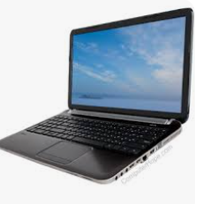
 Slim silver and black laptop featuring a full-sized chiclet keyboard, HD widescreen display, and multiple connectivity ports for professional multitasking.
High-Performance 15.6″ Silver Business Laptop
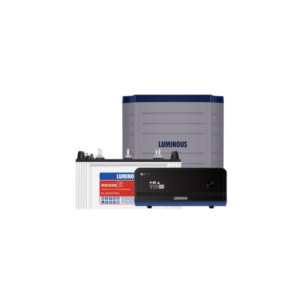 The Luminous Zelio+ 1100 Inverter with 120Ah Battery Combo is a proper home backup solution, not a temporary or portable fix like the smaller power stations you were looking at earlier. It delivers up to around 756W usable load with pure sine wave output, which means it can safely run everyday appliances like fans, lights, a TV, and even a refrigerator without stressing the devices or causing noise issues. The included 120Ah tubular battery is the real strength here, because it provides several hours of backup depending on how much load you put on it, making it suitable for typical Indian power cuts rather than just emergency shutdowns. The system is designed for stability and long-term use, with decent battery life, water level indicators for maintenance, and a trolley setup that makes installation manageable even though it’s not portable. However, this is still a single-battery inverter, so expecting it to run heavy loads like ACs or high-end gaming setups for long is unrealistic, and it does require periodic maintenance unlike lithium-based systems. Overall, this is a reliable, practical choice if your goal is consistent home backup for essential appliances, and it makes far more sense than smaller units if you actually need hours of uninterrupted power.
Home UPS 900VA Zelio WIFI 1100 Battery 120 Ah RC15000
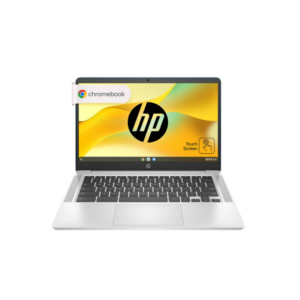 This laptop runs on Windows 11 Home and features a compact 35.6 cm HD Micro-Edge display, offering a lightweight and portable experience for basic everyday use. Powered by an Intel processor with Intel UHD Graphics 600 and integrated graphics support, it is suitable for simple tasks like web browsing, online classes, document work, and media streaming rather than heavy multitasking or gaming. The device comes with 4GB LPDDR4 memory and 64GB eMMC storage, which is quite limited by current standards and can fill up quickly with Windows updates and applications. Its convertible 2-in-1 design adds flexibility, allowing it to be used in laptop or tablet mode depending on the requirement. With Wi-Fi, Bluetooth connectivity, dual speakers, and a lightweight 1.49 kg build, it is mainly targeted at students or users looking for a basic portable device for light usage.
HP Chromebook X360 Intel Celeron N4020 14
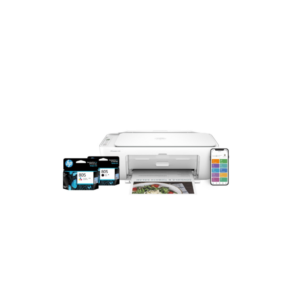 The HP DeskJet 2820 is a compact all-in-one inkjet printer designed for basic home and small office use, combining printing, scanning, and copying in a simple, clean white design that fits easily into any workspace. It supports wireless connectivity through Wi-Fi and Bluetooth, along with USB, making it flexible to use from laptops, smartphones, or tablets via HP’s smart app for quick setup and smooth operation. The printer delivers standard everyday performance with print speeds of around 7.5 pages per minute for black and 5.5 pages per minute for color, which is fine for light workloads but not ideal if you’re printing in bulk. It also comes with cloud support, allowing you to print directly from online services. Overall, this model is built for convenience and ease of use rather than speed or heavy-duty performance, making it suitable for students or casual users who need occasional printing without complexity.
HP DeskJet 2820 All-in-One Printer
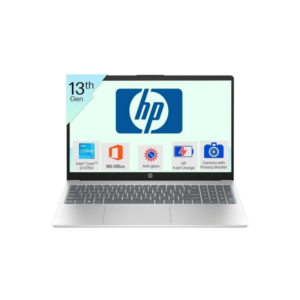 The HP 15-fd0006TU is a modern and practical everyday laptop built for students, office users, and regular multitasking needs. It features a 15.6-inch Full HD display that delivers clear visuals for work, streaming, browsing, and online classes, while the slim Natural Silver design gives it a clean and professional appearance. Powered by a 13th Gen Intel Core i3 processor with up to 4.5 GHz boost speed and 6 cores, the laptop handles daily productivity tasks smoothly, including Microsoft Office work, web browsing, video calls, and light multitasking. It comes with 8GB DDR4 RAM and a fast 512GB PCIe NVMe SSD, ensuring quicker boot times, responsive performance, and sufficient storage for files and applications. The laptop also includes Windows 11 Home and Microsoft Office 2021 pre-installed, which adds strong value for students and professionals. Features like a backlit keyboard with numeric keypad, Wi-Fi 6 connectivity, Full HD privacy webcam, dual speakers, SD card reader, and up to 9 hours of battery life make it a balanced choice for both work and entertainment. However, this is not a performance laptop for heavy gaming, advanced video editing, or demanding creative workloads because it relies on integrated graphics.
HP Laptop 13th Gen Intel Core i3
Electronics
Risus commodo viverra maecenas accumsan
lacus vel facilisis.