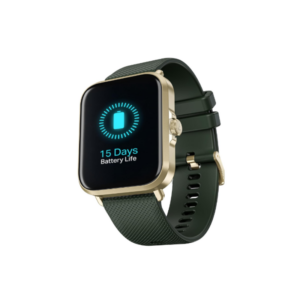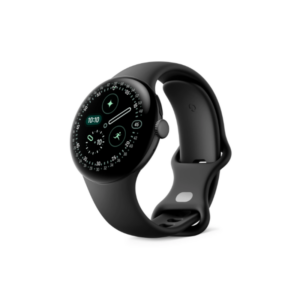
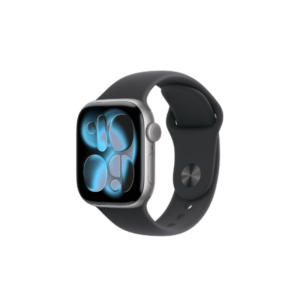
The Apple Watch Series 11 is designed to function as a personal health and fitness companion, not a smartphone. It delivers continuous health insights such as heart rate monitoring, irregular rhythm alerts, and sleep tracking with a detailed sleep score to help you understand recovery and daily readiness.
Fitness tracking goes beyond basic step counts, offering advanced workout metrics and real-time coaching through Workout Buddy, powered by Apple Intelligence when paired with a nearby iPhone. Whether you're training or just trying to stay consistent, it provides actionable data instead of vague summaries.
With up to 24 hours of battery life, it’s built for all-day wear, including workouts and sleep tracking. Cellular connectivity allows you to stay connected—calls, messages, and data—without needing your phone constantly nearby, though calling it “5G performance” is misleading in real-world usage for a smartwatch.
The design is water-resistant and built for everyday durability, with multiple color options to match different styles. Wireless charging adds convenience, making it easy to top up without cables.
What it does not have: a 6.1-inch display, rear cameras, or typical smartphone hardware. Those specs in your input are flat-out incorrect.
Bottom line: this is a health-first wearable with smart connectivity features, not a replacement for your phone. If you present it like a smartphone, you’ll lose credibility immediately.
Apple Watch Series 11
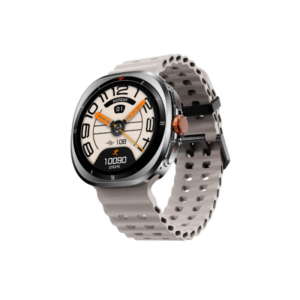

The Fire-Boltt Smartwatch is a straightforward, budget-focused wearable built for basic fitness tracking and everyday convenience rather than advanced smart features.
Designed with a round dial and digital display, it leans into a classic watch aesthetic while still offering modern functionality. The Bluetooth connectivity allows it to sync with your smartphone for notifications, calls (on supported models), and quick access to essential updates without pulling out your phone every time.
In terms of tracking, it covers the fundamentals—activity monitoring and sleep tracking. That means steps, basic movement data, and sleep patterns, but don’t expect highly accurate health analytics or medical-grade insights. This is surface-level tracking meant for awareness, not deep optimization.
The unisex design keeps it versatile, suitable for daily wear across different styles and use cases. It’s lightweight, easy to wear, and aimed at users who want something simple and functional.
Bottom line: this is an entry-level smartwatch that gets the basics done. If you’re expecting precision tracking, premium build, or advanced ecosystem features—you’re looking at the wrong category.
Axiom Smartwatch
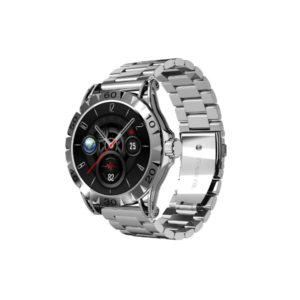
The boAt Smartwatch is a budget-oriented wearable built for basic smart functionality and everyday fitness tracking, not for high-end performance or precision health monitoring.
It features a digital display in a wristwatch form factor, designed for simple interaction and quick readability. With Bluetooth connectivity, it pairs with your smartphone to deliver notifications, call alerts, and app updates directly to your wrist—useful, but dependent on your phone being nearby.
The tracking capabilities cover essentials like activity and sleep monitoring. You’ll get step counts, movement data, and sleep insights, but don’t expect high accuracy or deep analytics—this is entry-level tracking meant for general awareness.
A notable addition is Google Assistant support, allowing basic voice commands and quick tasks through your connected device. It adds convenience, but it’s not a full standalone assistant experience like premium smartwatches.
Overall, the design is simple and functional, aimed at users who want an affordable smartwatch for daily use without getting into complex features or higher price ranges.
Bottom line: it does the basics—notifications, light tracking, and voice assistance. But if you expect accuracy, performance, or independence from your phone, this won’t deliver.
Boat Enigma Orion Men’s Luxury Smartwatc
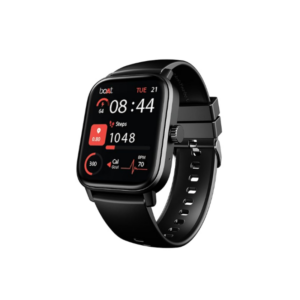 The boAt Wave Call 3 Smartwatch is a typical budget smartwatch that focuses more on convenience and style than real performance. It comes with a large 1.83-inch HD display, Bluetooth calling, and a functional crown, making everyday interactions smooth and fairly user-friendly for quick tasks like answering calls or checking notifications. Features like heart rate, SpO2, stress, sleep, and even female wellness tracking are included, but these are standard across this price segment and should be treated as rough estimates rather than accurate health data. The claimed 10-day battery life and IP68 resistance make it practical for daily wear, especially for casual fitness tracking and general use. However, like most entry-level smartwatches, it runs on a limited system with no real app ecosystem, meaning it’s essentially a smart extension of your phone rather than an independent device. Overall, it’s a decent pick if you want a stylish, feature-loaded watch for basic usage, but it doesn’t hold up if you’re expecting precision, advanced fitness insights, or a premium smartwatch experience.
boAt Wave Call 3 Smartwatch
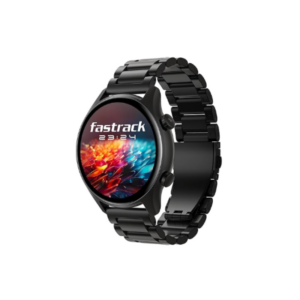 This smartwatch positions itself as a stylish, premium-looking wearable with a 1.43-inch AMOLED display, metal build, and features like Bluetooth calling and wellness tracking, but most of that value is surface-level. The display and design are genuinely better than typical budget options, giving it a more polished, watch-like feel, but under the hood it’s still a basic companion device with a limited operating system, not a true Android smartwatch with apps or deep functionality. Health features like heart rate, SpO2, and stress tracking exist, but they’re approximate at best and shouldn’t be taken seriously for accuracy. The vague battery spec is a concern and signals inconsistent product detailing, which usually reflects overall reliability. In reality, this is a fashion-first smartwatch that handles notifications, calls, and light tracking decently, but if you’re expecting performance, precision, or long-term value, it doesn’t deliver beyond the basics.
Fastrack Astor FR2 Pro 1.43 AMOLED Stainless Steel Smart Watch with SpO2, Heart Rate, BT Calling, Adaptive AOD, Functional Crown, AI Voice Assistant – Smartwatch for Stylish Pr
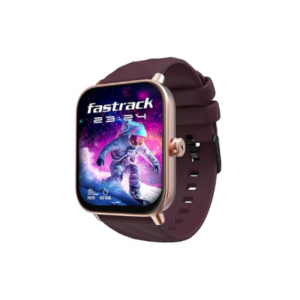
This is another entry-level Bluetooth smartwatch—the kind that looks feature-packed on paper but needs a reality check.
What it actually does well
- 1.83" display (450 nits) → Bright enough outdoors, decent clarity for the price. Nothing premium, but usable.
- Bluetooth calling → Works fine for quick calls, but don’t expect clean audio in noisy places.
- Basic smart features → Notifications, music control, camera trigger, alarms—standard stuff.
- 5-day battery → Average. Not bad, not impressive either.
Where the marketing is misleading
- “100+ sports modes” → This is mostly fluff. It’s not tracking 100 different activities in a meaningful way. It’s just categorizing movement differently.
- Health tracking (SpO2, stress, heart rate) → These are approximate readings, not medically reliable. Good for trends, not decisions.
- Stress tracking → Usually derived from heart rate variability—again, rough estimation, not actual stress measurement.
Build & durability
- IP67 → Fine for sweat and light splashes. Not for swimming or heavy water exposure.
- Likely plastic build → don’t expect long-term durability if you’re rough with it.
Fastrack Limitless Glide X
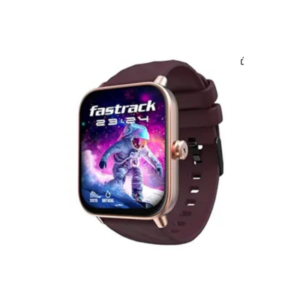
The Fastrack Smartwatch sits in the budget-to-mid range category, aiming to balance style with basic smart features rather than delivering anything advanced. It covers the essentials like activity tracking, sleep monitoring, Bluetooth connectivity, and alarm functions, making it suitable for everyday use if your expectations are simple. The design is usually one of Fastrack’s stronger points—more trendy and youth-focused compared to generic budget brands—so it works well as a lifestyle accessory.
But let’s be clear: this isn’t a performance-focused smartwatch. Tracking accuracy will be average at best, and features are mostly surface-level compared to premium devices. You’re not getting deep health insights, high-end display quality, or a refined software experience. It’s built more for notifications, light fitness tracking, and casual convenience rather than serious usage.
In short, if you want something affordable that looks decent and handles basic smartwatch tasks, it does the job. If you’re expecting precision, advanced health tracking, or a smooth ecosystem, this isn’t it.
Fastrack Limitless Glide X Smartwatch
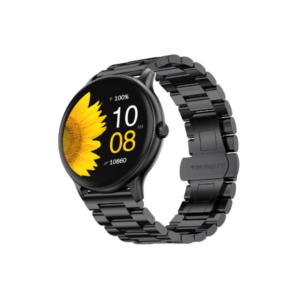
This smartwatch positions itself as a “modern luxury” wearable, but don’t get carried away by the wording—the reality is more grounded. It packs a decent set of features for everyday use, including heart rate monitoring, SpO2 tracking, sleep analysis, step counting, and support for 120+ sports modes, which is more than enough for casual fitness tracking. The addition of Bluetooth calling, voice assistant support, notifications, and music control makes it useful for day-to-day convenience, while the metal body with a stainless steel strap and magnetic closure gives it a more premium look than typical budget watches.
That said, there are clear limitations. There’s no GPS, so all tracking that involves distance or routes depends on your phone. Metrics like SpO2 and heart rate are fine for general awareness but not something you should rely on for accuracy. The TFT display is serviceable but nowhere near the sharpness or smoothness of AMOLED panels, and the overall software experience will feel basic compared to higher-end smartwatches. Battery life of up to 7 days is solid, but that’s expected at this level.
Bottom line: it’s a good-looking, feature-packed budget smartwatch for casual users who want convenience and style, but it’s not built for serious fitness tracking or a polished smart ecosystem.
Fire-Boltt Phoenix Ultra HD Display
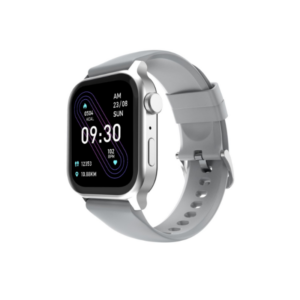 The Fire-Boltt Rise Grey Smartwatch is another entry-level smartwatch that focuses on offering a wide feature list at a low price, but you need to keep expectations realistic. It covers the basics—activity tracking, sleep monitoring, Bluetooth connectivity, alarms, and even GPS on paper—but in this segment, features like GPS and health tracking are often inconsistent or dependent on your phone rather than being truly built-in and accurate. The design is simple and versatile enough for daily wear, and water resistance adds some practicality, but the overall experience is still limited to notifications, basic tracking, and light utility. Performance, app support, and data accuracy won’t match higher-end devices, and that’s the trade-off you’re making. In short, it’s fine if you want a budget-friendly smartwatch for casual use, but don’t expect reliability, precision, or a polished ecosystem—it’s more of a basic smart accessory than a serious fitness or productivity tool.
Fire-Boltt Rise Smartwatch
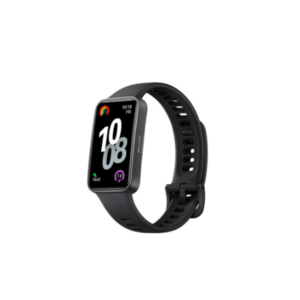
The Huawei Fitness Smart Band is clearly built for people who care more about consistent health tracking and comfort than flashy smartwatch features—and in that role, it actually makes a lot of sense. Its lightweight 15 g design and slim rectangular AMOLED display make it ideal for 24/7 wear, especially for sleep tracking, which is one of its strongest areas. The addition of HRV-based sleep analysis is a meaningful upgrade, giving you deeper insight into stress, recovery, and overall health trends rather than just basic sleep stages. On top of that, it covers the usual essentials like heart rate, SpO2, stress tracking, menstrual cycle tracking, and even emotion monitoring—though let’s be honest, that “emotion” feature is more gimmick than science.
Where it performs well is consistency: battery life of up to 14 days is excellent, fast charging is genuinely useful, and Huawei’s algorithms are known to be relatively reliable in this segment. The 100 workout modes and decent swimming tracking (thanks to the 9-axis sensor) make it versatile for general fitness users. But there are trade-offs you shouldn’t ignore—there’s no built-in GPS (you’ll depend on your phone), no real app ecosystem, and limited smart features beyond notifications and basic controls.
Bottom line: this is a solid fitness band pretending to be a smartwatch. If your priority is health tracking, long battery life, and comfort, it’s a smart pick. If you want a full smartwatch experience with apps, independence from your phone, and richer functionality, this will feel limited pretty quickly.
Huawei Band 10 Smartwatch