 5G speed. A14 Bionic, the fastest chip in a smartphone. An edge-to-edge OLED display. Ceramic Shield with four times better drop performance.
- 6.1-inch Super Retina XDR display2
- Ceramic Shield, tougher than any smartphone glass
- 5G for superfast downloads and high-quality streaming
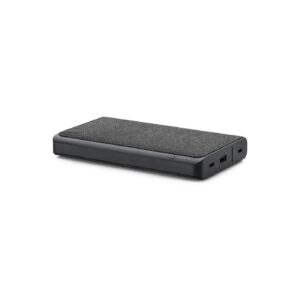
All the Power You Expect, without the Cord. Go where ambition takes you with the Cordless Hand Mixer from KitchenAid.Mophie powerstation USB-C 3XL Battery
₹199.95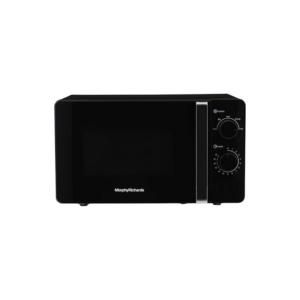

The Morphy Richards 20L Solo Microwave Oven is a straightforward entry-level solo microwave built for users who want simplicity instead of complicated touch controls and dozens of gimmicky cooking modes. This is the kind of microwave mainly suited for bachelors, couples, students, or small families whose primary usage is reheating food, defrosting frozen items, and basic microwave cooking.
The 20-liter capacity is standard and practical for everyday household use without taking up too much kitchen space. It includes 6 adjustable power levels, allowing you to control heating intensity depending on whether you’re reheating leftovers, melting ingredients, softening butter, or defrosting meat. The mechanical knob controls are actually a strength for some users because they are easier to operate, more durable long term, and less prone to touch-panel failures or moisture issues common in cheaper digital microwaves.
The defrost function helps thaw frozen food faster while maintaining texture reasonably well, and the large 245mm turntable improves heating uniformity for medium-sized plates and bowls. Features like overheat protection and low-noise operation improve safety and day-to-day usability, while the black finish gives it a cleaner and more modern appearance than many budget microwaves.
But the limitation is obvious and important: this is purely a solo microwave. No grilling, no baking, no convection cooking, no crispy textures. It heats food and handles basic microwave tasks — nothing more. If someone buys this expecting pizza baking or restaurant-style grilling because of marketing images, they’re buying the wrong appliance category entirely.
So realistically, this microwave makes sense only if your priorities are simplicity, reliability, basic reheating, and affordability. For actual baking or grilling, spending slightly more on a convection microwave or OTG would make far more sense long term.
Morphy Richards 20 L Solo
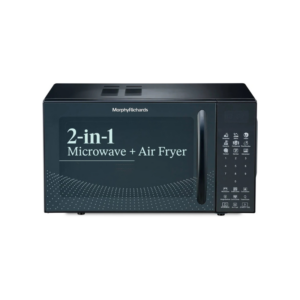
The 23L Convection Microwave Oven is positioned between compact 20L models and larger family-sized convection microwaves, making it a balanced option for users who want genuine baking and grilling capability without occupying too much kitchen space. With a 23-liter cavity, it offers slightly more flexibility for baking trays and cookware compared to basic 20L models, which can feel cramped quickly when cooking larger portions.
Since it supports convection cooking, this microwave can handle baking cakes, pizzas, cookies, grilled dishes, and roasted recipes in addition to regular reheating and defrosting tasks. That already makes it significantly more versatile than solo or grill-only microwaves. The stainless-steel interior improves durability and heat handling, while the anti-bacterial and anti-fungal cavity coatings are useful in humid kitchens where moisture buildup and odor issues become common over time.
The touch membrane controls give it a cleaner modern interface, though membrane panels are not always as durable as physical knobs in the long run. Its countertop installation keeps it simple for home users without requiring built-in kitchen modifications. At 15.4 kg, it’s substantial enough to feel solid but still manageable for normal kitchen setups.
Now the practical reality: this category is ideal for users who want one appliance capable of reheating plus moderate baking and grilling. But convection microwaves still involve compromise. They’re convenient all-rounders, not specialist ovens. If your main focus is serious baking, artisan breads, large pizzas, or heavy grilling, a dedicated OTG still performs better because of superior airflow and heating consistency.
For most regular households though, a 23L convection microwave is a sensible middle-ground choice because it handles daily microwave usage while still giving enough flexibility for weekend baking and grilling without needing separate appliances.
Morphy Richards Air 23L
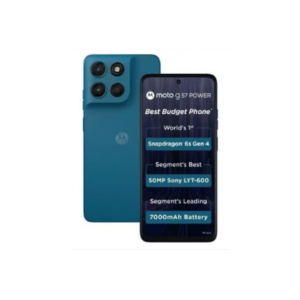
The Moto G57 Power 5G is built around one clear idea: endurance without compromise. It combines a massive 7000 mAh silicon-carbon battery with efficient hardware, delivering up to 60 hours of usage on a single charge. Even when you do run low, 30 W TurboPower fast charging ensures you’re not stuck waiting around.
On the front, a large 6.72-inch FHD+ display with a 120 Hz refresh rate keeps everything smooth and responsive, whether you’re scrolling, streaming, or gaming. With brightness reaching up to 1050 nits, visibility stays solid even outdoors, while the flat LCD panel keeps things practical and durable.
Performance is handled by the Snapdragon 6s Gen 4 processor paired with 8 GB RAM and 128 GB UFS 2.2 storage. It’s not trying to compete with flagship chips—but for social media, multitasking, browsing, and casual gaming, it’s fast enough and consistent. RAM Boost adds a virtual memory layer when you push it harder, which helps avoid slowdowns.
Camera performance is straightforward but capable. The 50 MP Sony LYT-600 main sensor captures detailed shots, supported by an 8 MP ultra-wide for broader scenes. AI-driven features like Auto Night Vision, Magic Eraser, and gesture-based shooting add usability rather than gimmicks. On the front, an 8 MP camera handles video calls and content creation with up to 2K recording.
Design and durability lean toward practicality. A vegan leather back improves grip and reduces fingerprints, while IP64 protection and MIL-STD-810H testing add real-world resilience. It’s not premium glass-and-metal luxury—but it’s built to survive daily use without stress.
Connectivity and software are equally functional. With 5G support, Wi-Fi 6, NFC, and Android 16 (with a promised upgrade and three years of security updates), it’s designed to stay relevant for the long run. Extras like stereo speakers, a 3.5 mm headphone jack, and Moto’s Smart Connect features round out the experience.
Bottom line: this is a battery-first phone that sacrifices flagship polish for reliability and longevity. If you expect top-tier performance or camera excellence, you’ll be disappointed. But if you want a device that just keeps going, handles everyday tasks smoothly, and doesn’t die on you halfway through the day, it does exactly what it’s built for.
Motorola G57 Power 5G
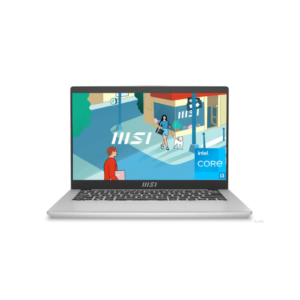
This is a classic thin-and-light productivity laptop, not a performance machine. The specs are balanced for students, office work, browsing, meetings, content consumption, and normal multitasking — but there are clear limitations you shouldn’t ignore.
The strongest part here is portability. At 1.4 kg with a 10-hour claimed battery life, Wi-Fi 6, SSD storage, and an IPS Full HD display, this is built for mobility and daily convenience. The IPS panel is important because cheap laptops still use terrible TN panels with weak viewing angles and washed-out colors. So visually, this should look decent for normal usage.
The processor boosting up to 4.5 GHz means everyday performance will feel responsive for:
- Chrome tabs
- Office work
- Zoom/Meet meetings
- Social media management
- Netflix/YouTube
- Light Canva or Photoshop work
- Coding basics
The problem is memory limitation. The maximum supported RAM is only 8GB and it’s onboard dual-channel RAM, meaning it’s soldered and non-upgradable. That’s the biggest weakness here. In 2026, 8GB is becoming the bare minimum even for casual users because browsers alone eat RAM aggressively. If you multitask heavily with many tabs, Adobe apps, editing tools, or multiple programs open, you’ll feel the ceiling sooner than expected.
Another limitation is the integrated graphics. Shared graphics means this is not for gaming, heavy editing, rendering, or demanding creative workloads. Casual gaming is fine. Serious gaming is not.
The battery size itself — 39.3Wh — is actually not huge. So the “10 hours” claim is likely based on light usage at reduced brightness. Realistically expect:
- 5–7 hours normal use
- Less if brightness is high or multitasking heavily
Also, the 45% NTSC color gamut is average at best. Fine for regular users, weak for professional color work. Content creators who care about accurate colors should avoid this category.
Overall, this type of laptop is good if your priorities are:
- Lightweight
- Affordable
- Daily productivity
- Student/work usage
- Portability
But if you want:
- Long-term future-proofing
- Heavy multitasking
- Gaming
- Editing
- High-end performance
…then the soldered 8GB RAM becomes a bottleneck very quickly.
MSI Modern 14 Laptop
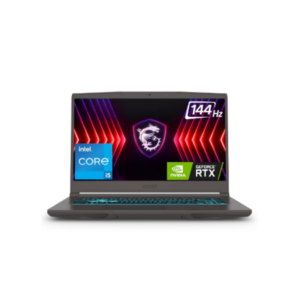
This is clearly a budget-to-midrange gaming laptop setup, not an ultrabook. The important detail here is the dedicated 4GB GDDR6 graphics card — that’s what separates this from normal office laptops. Even though the processor clock starts at 1.5 GHz, modern Intel chips dynamically boost higher under load, so the base clock alone means almost nothing.
The good part is upgradeability. Support for up to 64GB DDR4 RAM is a strong advantage because many thin laptops today lock users into soldered memory. That means this machine can age much better if you upgrade RAM later. The 512GB SSD with PCIe storage is standard and fast enough for gaming, boot times, and multitasking.
But don’t misunderstand the positioning. A 4GB GPU in 2026 is entry-level gaming territory now. It’s enough for esports titles like Valorant, Counter-Strike 2, Grand Theft Auto V, and medium settings in many AAA games. But if you expect ultra settings, ray tracing, or future-proof AAA gaming for years, this will struggle. VRAM limitations hit hard in modern games.
The weight — 1.86 kg — is reasonable for a gaming-oriented machine. Not ultra-light, but portable enough. Battery life will also not be amazing despite the 52.4Wh battery because dedicated GPUs drain power quickly. Gaming laptops are basically “portable desktops,” not true all-day battery devices.
The biggest missing information is the exact GPU and CPU model. That matters massively. Saying “Intel + 4GB GDDR6” is incomplete because performance could vary hugely between something weak like an RTX 2050 and something decent like an RTX 3050/4050. Same with Intel generation. Specs without exact chip names are marketing fluff.
MSI Thin 15 Gaming Laptop
 Stylish smartphone with quad rear cameras, matte finish body, and smooth performance for photography and multitasking.
Multi-Camera Smartphone with Matte Finish – Green
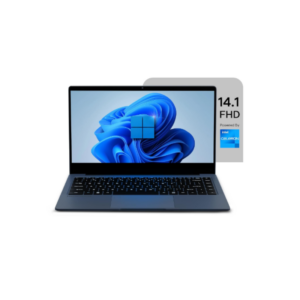 This laptop is a lightweight and budget-oriented device designed mainly for basic everyday computing tasks. It features a 14.1-inch Full HD display that offers decent clarity for watching videos, attending online classes, browsing, and office work. Powered by an Intel processor with speeds up to 2.8 GHz, along with 4GB RAM and 128GB SSD storage, it can comfortably handle light tasks such as web browsing, document editing, presentations, emails, and media consumption. The SSD helps improve boot speed and overall responsiveness compared to traditional hard drives. Weighing only 1.3 kg, the laptop is easy to carry around, making it suitable for students, remote workers, and users who need portability. However, this is not a performance-focused machine, so heavy multitasking, gaming, video editing, or demanding software usage will be limited due to the entry-level hardware and lower RAM capacity.
Neopticon BrowseBook 14.1
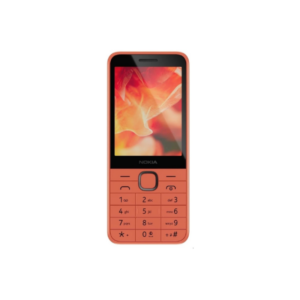
This feature phone strikes a balance between classic usability and essential modern connectivity, making it a practical choice for users who want simplicity without being completely outdated.
It features a compact 2.8-inch TFT LCD touchscreen with a 240 × 320 resolution, offering a basic yet functional viewing experience. Unlike traditional keypad-only phones, the addition of touch support gives it a slightly more flexible interface while still retaining physical buttons for easy navigation.
The device is equipped with a 0.3 MP rear camera paired with a torch, designed purely for utility rather than photography. It handles basic image capture and doubles as a flashlight when needed—nothing more, nothing less.
Running on the S30+ operating system, the phone focuses on core functions like calling, messaging, music playback, and light browsing. With 4G LTE support and HD calling, it ensures better voice clarity and faster basic connectivity compared to older 2G feature phones.
Battery life is dependable, powered by a 1200 mAh removable battery that delivers up to 9.8 hours of talk time and long standby duration. It also supports USB Type-C charging, which is a rare but practical upgrade in this category.
Additional features include Bluetooth 5.0, dual SIM support, expandable storage up to 32 GB via microSD, FM radio, and an MP3 player—covering all essential entertainment and communication needs.
Weighing just 86.5 grams and built with a durable polycarbonate body, the phone is lightweight, sturdy, and easy to carry, making it ideal for backup usage, travel, or users who prefer a distraction-free mobile experience.
Overall, this device is built for practicality. It doesn’t try to compete with smartphones—it delivers exactly what it’s meant for: reliable communication, long battery life, and simple everyday use with a touch of modern connectivity.
Nokia 220 4G Dual SIM Keypad Phone, Built-in UPI App, USB Type C (Peach)
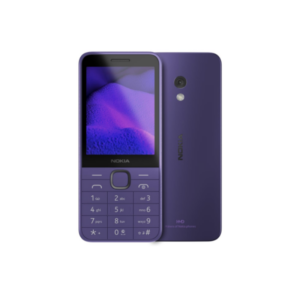
A modern take on a classic feature phone that tries to bridge the gap between simplicity and just enough “smart” functionality. Running on the S30+ operating system with 64 MB RAM and a basic 1 GHz processor, it’s clearly not built for performance—it’s built for reliability and minimal usage.
The 2.8-inch display is relatively large for this category, making it easier to read messages, view photos, and navigate menus compared to smaller keypad phones. The rear camera is included for casual snapshots, but expectations need to stay realistic—it’s there for convenience, not quality.
Where this device stands out slightly is in its “cloud app” support. You get access to lightweight versions of YouTube and YouTube Shorts, along with basic news and games. But don’t misread this—these are stripped-down, internet-dependent experiences, not smooth app-like usage you’d expect from a smartphone.
A genuinely useful addition is built-in UPI support with scan-and-pay functionality. That makes it surprisingly practical for everyday transactions, especially in India, where digital payments are essential—even for users who don’t want a smartphone.
Entertainment is simple but effective: wireless FM radio, MP3 playback, and even the classic Snake game. It leans heavily into nostalgia while still covering basic media needs without requiring internet.
Battery life is one of its strongest points. You can expect long standby times and days of usage on a single charge, which is exactly what this category is meant to deliver.
Connectivity and capabilities remain limited—this is still a feature phone. No advanced apps, no multitasking, no real browsing experience. But that’s intentional.
Bottom line: this phone is for people who want essential connectivity with a few modern touches like UPI and light internet access—without the distraction, cost, or complexity of a smartphone. It’s practical, focused, and deliberately limited.
Nokia 235 4G All-New 4G Keypad Phone with Dual SIM, Scan & Pay UPI, Rear Camera, Wireless FM Radio, MP3 Player, Bluetooth & USB Type C Purple
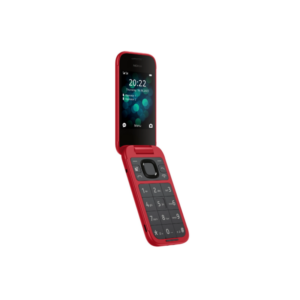
A practical and no-frills 4G flip phone built for reliability, clarity, and ease of use rather than modern smartphone complexity. It features a compact 2.8-inch TFT display with a simple, zoomed-in interface that prioritises readability, paired with large physical buttons and a classic keypad for effortless navigation—especially useful for users who don’t want touchscreens.
The device includes a basic 0.3 MP rear camera with flash for occasional snapshots, but photography is clearly not the focus here. Instead, it delivers where it actually matters for its audience: strong battery endurance with up to 4+ days of regular use and up to 11 days on standby, supported by a removable 1450 mAh battery—something most modern phones no longer offer.
Connectivity is straightforward with dual SIM support, 4G LTE capability, Bluetooth 4.2, and essential ports like Micro-USB and a 3.5 mm headphone jack. There’s no Wi-Fi or GPS, which keeps things simple and distraction-free. An emergency SOS button adds a critical safety layer, making it especially suitable for seniors or anyone needing quick access to help.
Built with a sturdy polycarbonate body and a flip design that protects the screen and keypad, it’s durable enough for everyday handling. Additional practical touches like hearing aid compatibility, FM radio, expandable storage via microSD, and a hands-free speaker enhance usability without overcomplicating the experience.
This is not a “smart” device—it’s intentionally limited. But that’s the whole point. It’s designed for calling, basic communication, and reliability, making it ideal as a primary phone for minimal users or a dependable secondary device.
Nokia 2660 Flip 4g Dual Sim Keypad Phone
Electronics
Risus commodo viverra maecenas accumsan
lacus vel facilisis.